Gaida Chowk · ≈200 m
Gaindakot — our factory
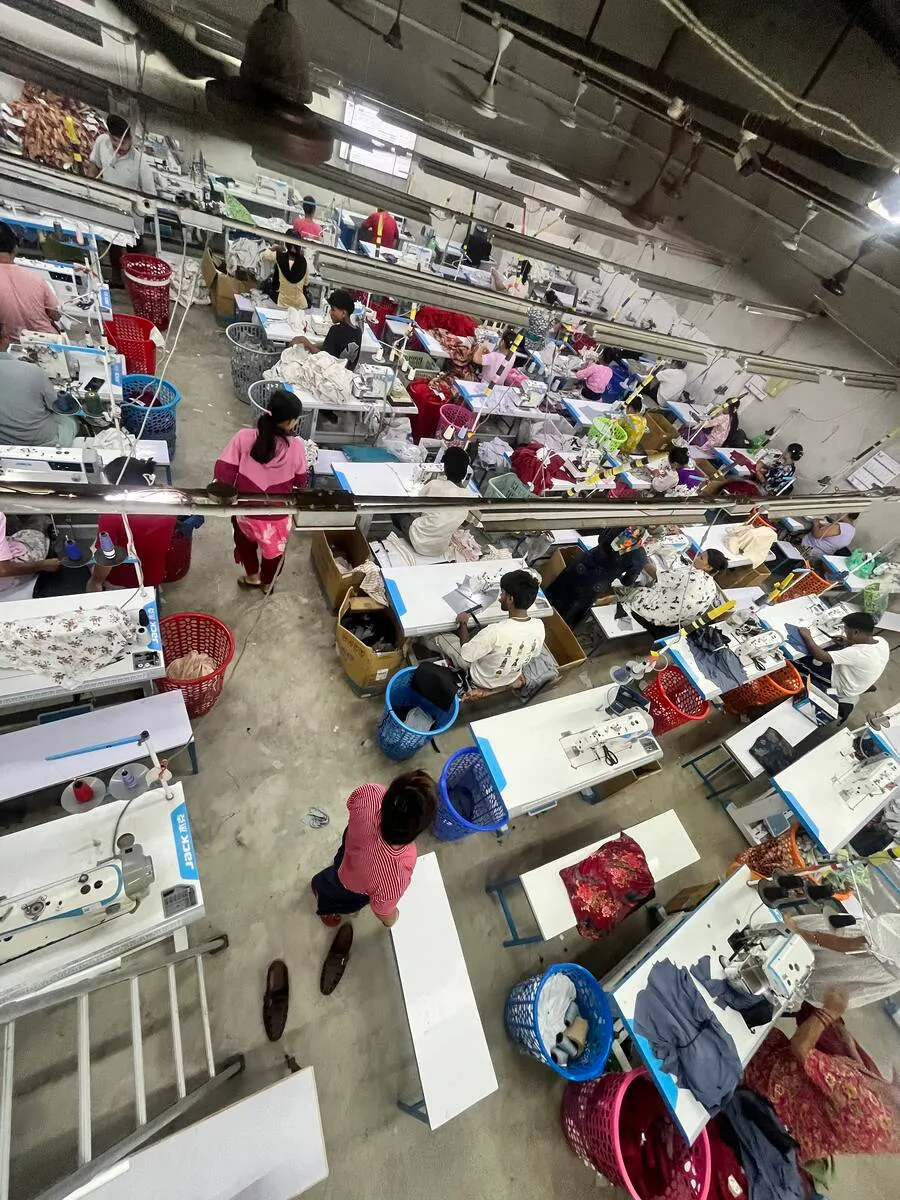
Our cut-and-sew floor: 150+ machines and a team that is 80% women. Near Nepal’s East–West Highway, minutes from Devghat, where the Kali Gandaki and the Trishuli become the Narayani.
Aboutहाम्रो कथा
In Sanskrit, “Trishakti” means the three powers — creation, preservation and transformation. Our factory is young; the family trade behind it goes back to 1991.
Why “Trishakti” त्रिशक्ति
In Sanskrit, “Trishakti” means the three powers — of Brahma, Vishnu and Maheshwor: creation, preservation and transformation. We chose the name because it describes honest manufacturing: create what the buyer imagines, preserve the standard on every piece, and transform cloth into something worth selling.
Where we are
Our factory stands in Gaida Chowk, Gaindakot, near Nepal’s East–West Highway — minutes from Devghat, the sacred confluence where the Kali Gandaki and the Trishuli become the Narayani. The hills of the Mahabharat range rise to the north; on a clear morning, the Himalaya.
It is a practical place to make garments, too: the highway runs straight to the Indian border and on to the ports of Kolkata and Visakhapatnam.
Right now in Gaindakot
—:— NPT · UTC+5:45
Sun–Fri, 9:00–18:00
Office open (Sat, until 12:00)Saturday — our weekly day offOffice open · the line is runningLine running · office opens 9:00Closed now · we reply from 9:00 NPTclearmostly clearpartly cloudyovercastfogdrizzlelight rainrainheavy rainshowersheavy showersthunderstorm
← Swipe the map · tap any mountain or pin →
Gaida Chowk · ≈200 m
Our cut-and-sew floor: 150+ machines and a team that is 80% women. Near Nepal’s East–West Highway, minutes from Devghat, where the Kali Gandaki and the Trishuli become the Narayani.
Capital · Tribhuvan International Airport
Our air-freight gateway (FCA Kathmandu), about five hours by road. Samples and urgent orders fly from here and usually land within a week.
Start of the sea route
Nepal’s main dry port, rail-linked to Kolkata/Haldia and Visakhapatnam. Our sea cargo crosses India here — heading, like every river on this map, for the Bay of Bengal.
Lake city below the Annapurnas
Nepal’s lakeside city beneath Machhapuchhre and the Annapurna range — about half a day’s drive from our factory. The Seti Gandaki runs through it.
Birthplace of the Buddha
A UNESCO World Heritage Site in the plains west of us, near the Bhairahawa–Sunauli crossing into India.
8,849 m · world’s highest
The highest point on Earth, on Nepal’s border with China. Its Nepali name means “forehead of the sky”; the Sherpa people call it Chomolungma.
8,586 m · world’s 3rd highest
The world’s third-highest mountain, in Nepal’s far east. Its five summits are said to hold five treasures — gold, silver, gems, grain and holy books.
8,516 m · world’s 4th highest
The world’s fourth-highest mountain, standing shoulder to shoulder with Everest — the two share much of the same climbing route.
8,485 m · world’s 5th highest
The world’s fifth-highest mountain, a striking four-sided pyramid rising above the Arun valley — a river that flows on to join the Koshi.
8,188 m · world’s 6th highest
The world’s sixth-highest mountain, west of Everest, beside the ancient Nangpa La trade route between Nepal and Tibet.
8,167 m · world’s 7th highest
The world’s seventh-highest mountain. The Kali Gandaki runs between it and Annapurna through one of the deepest gorges on Earth — then on past our factory to Devghat.
8,163 m · world’s 8th highest
The world’s eighth-highest mountain, in Gorkha district — the homeland of the Gorkha kings who unified Nepal.
8,091 m · world’s 10th highest
The first 8,000-metre mountain ever climbed. Its massif towers over Pokhara, and its snow feeds the Kali Gandaki and Seti rivers.
7,422 m
A cluster of peaks named for Ganesh, remover of obstacles — clearly visible from Kathmandu on a clear morning.
7,234 m
The high point of the Langtang valley, the closest great Himalayan range to Kathmandu. Its meltwater feeds the Trishuli — which meets the Kali Gandaki at Devghat, beside our factory.
7,134 m
A mountain sacred to Hindus as the divine couple Parvati and Shiva, and to Sherpas as Tseringma, one of five sisters of long life.
7,132 m
The highest peak of Nepal’s far west, rising above the upper Mahakali valley — remote, rarely visited and beautiful.
7,031 m
A lone giant of the far west, standing between the Seti and Karnali river systems.
6,993 m
Named for its twin-pointed summit shaped like a fish’s tail. Held sacred to Shiva, it is closed to climbers — its summit has never officially been stood upon.
6,812 m
Often called the most beautiful mountain in the world — its long ridges are the mother’s arms, and its hanging glacier the dablam, a pendant worn by Sherpa women.
Tap a pin or any mountain. Outline: Survey Department of Nepal. Rivers © OpenStreetMap contributors. Peaks: all eight of Nepal’s 8,000-metre mountains.
Since 1991
1991
Family fashion trade begins
750+
Stores supplied across Nepal
2023
Export factory opens in Gaindakot
2026
REX registered · line scaled to 150+ machines
Trishakti Apparel is the manufacturing arm of Trishakti Stores — a family fashion business trading since 1991 and supplying 750+ retail and wholesale stores across Nepal. A young factory, backed by three decades of trade.
The family
01
Trishakti Apparel was established in 2023, growing out of Trishakti Stores — a fashion-trade business founded in 1991 that supplies 750+ retail and wholesale stores across Nepal. It builds on more than three decades of family experience in the industry.
Our factory in Gaindakot runs a dedicated cut-and-sew line focused on quality knit basics — t-shirts, polos, sweatshirts and similar jersey and piqué garments — produced to each brand’s own designs and spec charts. In-house Optitex CAD handles pattern making, marking and resizing, so fits stay consistent and fabric is used efficiently.
We built Trishakti Apparel to be the kind of partner growing brands actually want: realistic minimums, a careful finish on the garments we specialise in, and honest, transparent communication from first consultation to final delivery.
02An inclusive floor
Our production team includes deaf colleagues. We are proud to create a workplace where skilled people can contribute, grow and be respected for the quality of their work.
Clear communication, practical support and a team-first culture help keep the floor focused on the details that matter to every order.
03Life at Trishakti
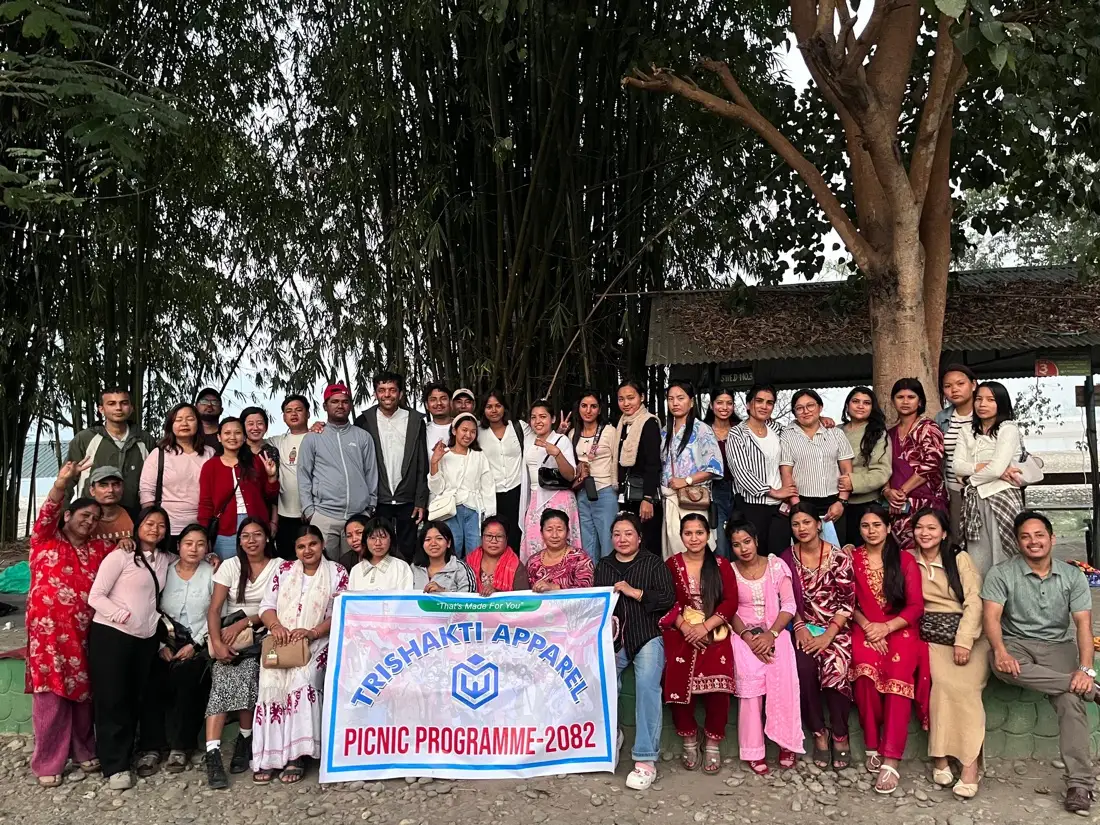
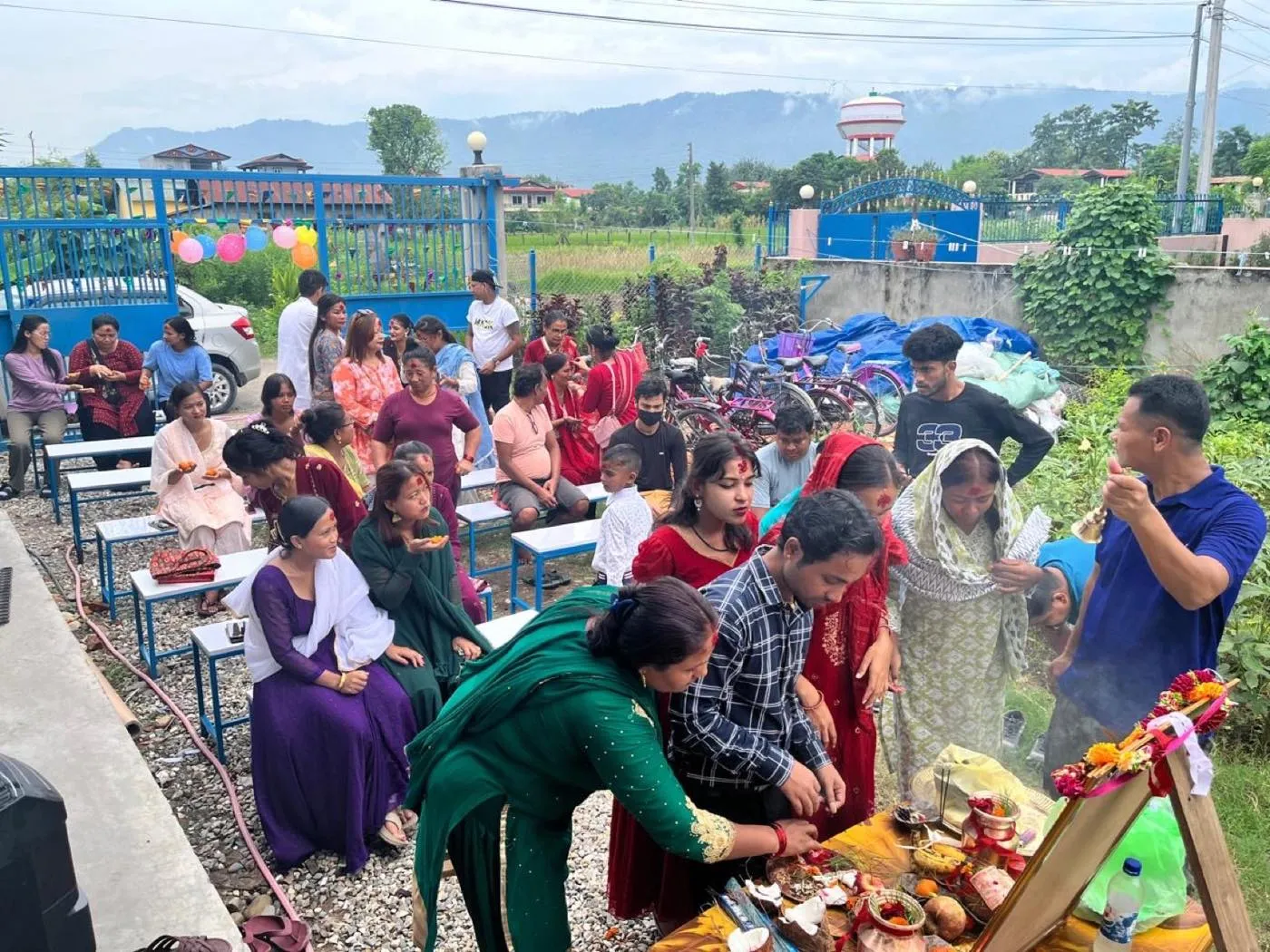
Our team is local to Gaindakot, permanent, and around 80% women. These are our own photographs, not stock. See more from the factory and the team.
Namaste — let’s talk
Send a tech pack, a photo or just an idea. You’ll hear back from the people who run the floor — usually within 24 hours, Nepal time.