REX registered 0% duty into the EU, UK, Canada & Japan — see current status

About Nepalनेपाल

Nepal — the country behind your garments

Every garment carries a little of where it was made. Here is ours: a small country of big mountains, old trade routes and people who keep their word.

The flag राष्ट्रिय झण्डा

The only national flag that isn’t a rectangle.

Two stacked pennants, taller than they are wide — and its exact construction is written, step by geometric step, into Nepal’s Constitution. Constitute Project (source: Constitution of Nepal (2015) — Article 8 and Schedule 1: the national flag, opens in a new tab) CNN Travel (source: The mysterious, mathematical origins of the world’s only non-rectangular national flag, opens in a new tab)

Crimson
Bravery — and the rhododendron, Nepal’s national flower.
Blue border
Peace.
Moon, 8 rays showing
The calm, gentle nature of the Nepali people.
Sun, 12 rays
Fierce resolve. Together with the moon: may Nepal last as long as both.

What it says about how we work: calm when plans change, determined to deliver — the moon and the sun, on every order. Adopted 16 December 1962. Wikipedia (source: Flag of Nepal (adoption 16 December 1962; symbolism), opens in a new tab)

A short history इतिहास

From the Buddha’s birthplace to your shelves.

Each chapter of Nepal’s story — and what it means for you as a buyer today.

  1. From c. 5th century CE

    A trading crossroads of the Himalaya

    Under the Licchavi and later the Malla kings, the Kathmandu Valley grew rich on trade between India and Tibet, and its Newar artisans became famous for metalwork, woodcarving and weaving. UNESCO World Heritage Centre (source: Kathmandu Valley, opens in a new tab) +1

    What it means for you

    Making goods for distant markets — and moving them across mountains — is an old Nepali skill, not a new one.

  2. 1814–1816

    Never colonised — and the Gurkha legend begins

    Nepal fought the British East India Company to a treaty and was never ruled by a foreign power. The courage of its soldiers gave the world the Gurkhas, a byword for loyalty and honour. Encyclopaedia Britannica (source: Nepal — History, opens in a new tab) +1

    What it means for you

    Loyalty and keeping your word are national values here. We try to earn that same reputation with every order.

  3. 2005

    Quotas end — the survivors specialise

    When the quota system ended, much of the volume moved to larger countries. The factories that stayed learned to compete on quality, flexibility and service rather than guaranteed quota. The Kathmandu Post (source: Export of Nepali readymade garment hits 13-year high (2019) — the pre-2005 quota era, opens in a new tab)

    What it means for you

    That is where we come from: low minimums, careful quality and a team you can talk to — not a mega-factory queue.

  4. 1991 · 2023 · 2026

    Our chapter

    The Rijal family’s Trishakti Stores began trading in 1991; Trishakti Apparel opened its export factory in Gaindakot in 2023 and registered in the EU’s REX system in 2026.

    What it means for you

    A young factory with three decades of trade behind it — and 0% duty into the EU, UK, Canada and Japan in front of it.

Culture on our floor संस्कृति

Festivals, faith and a factory family.

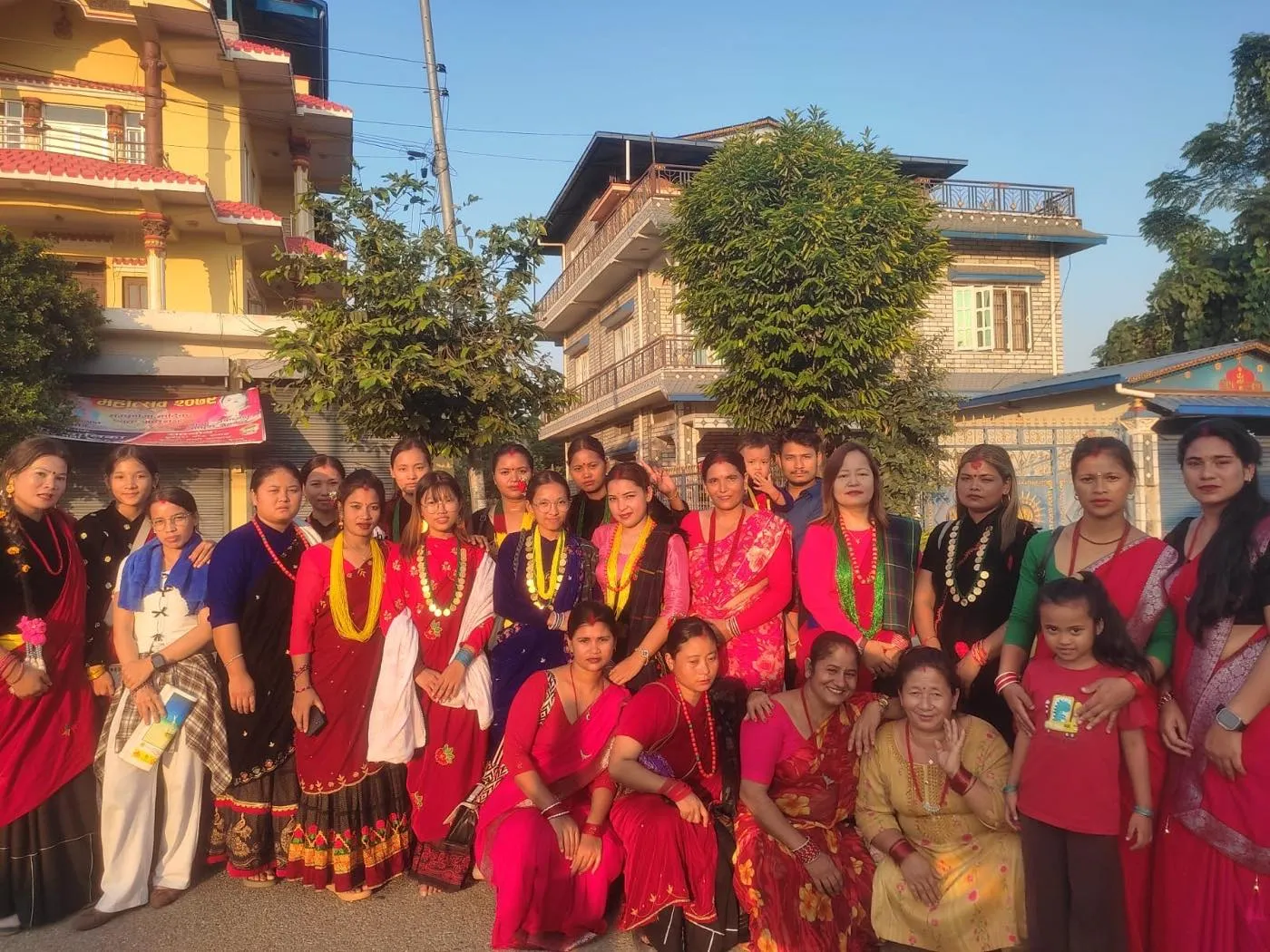
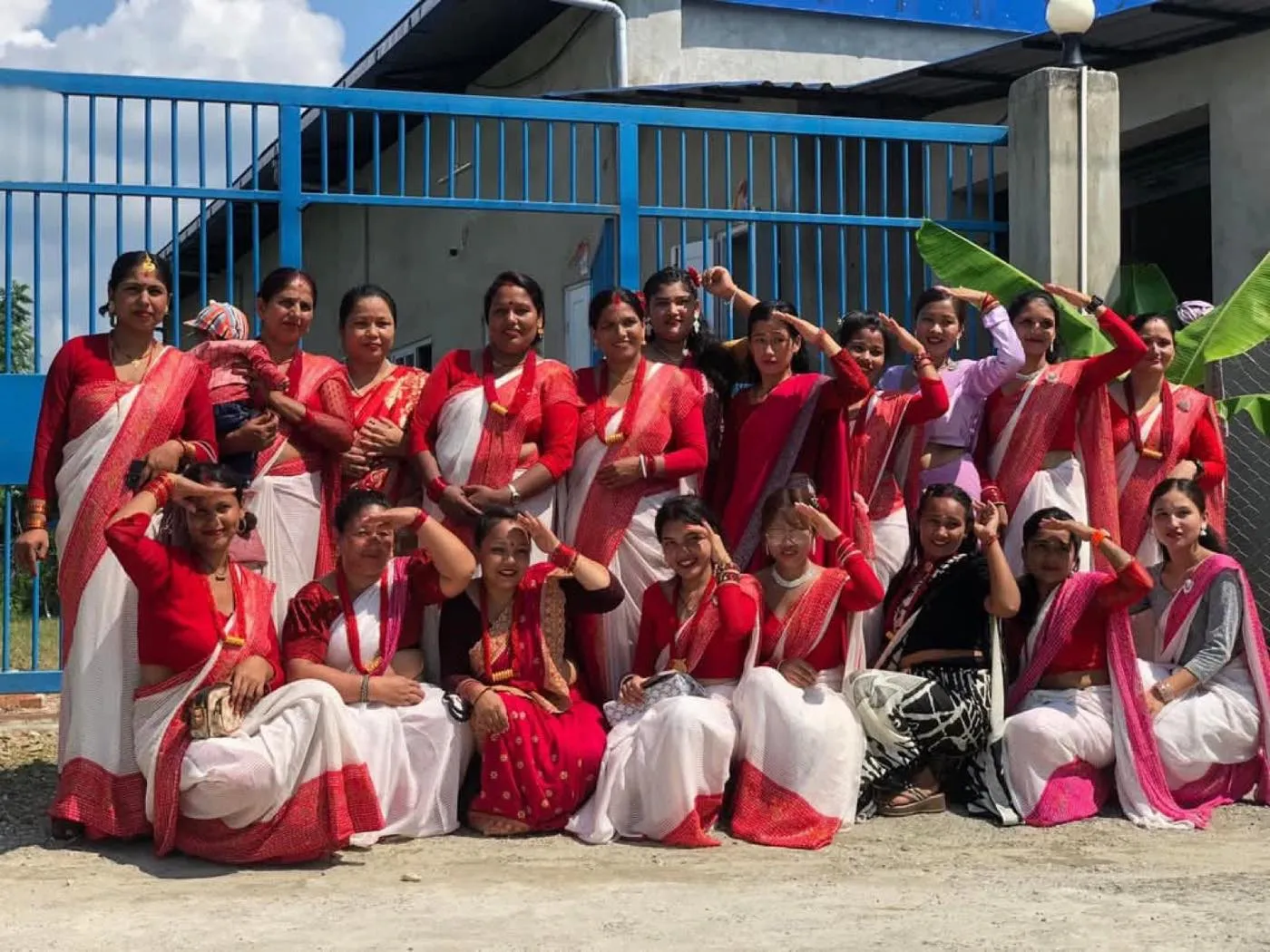
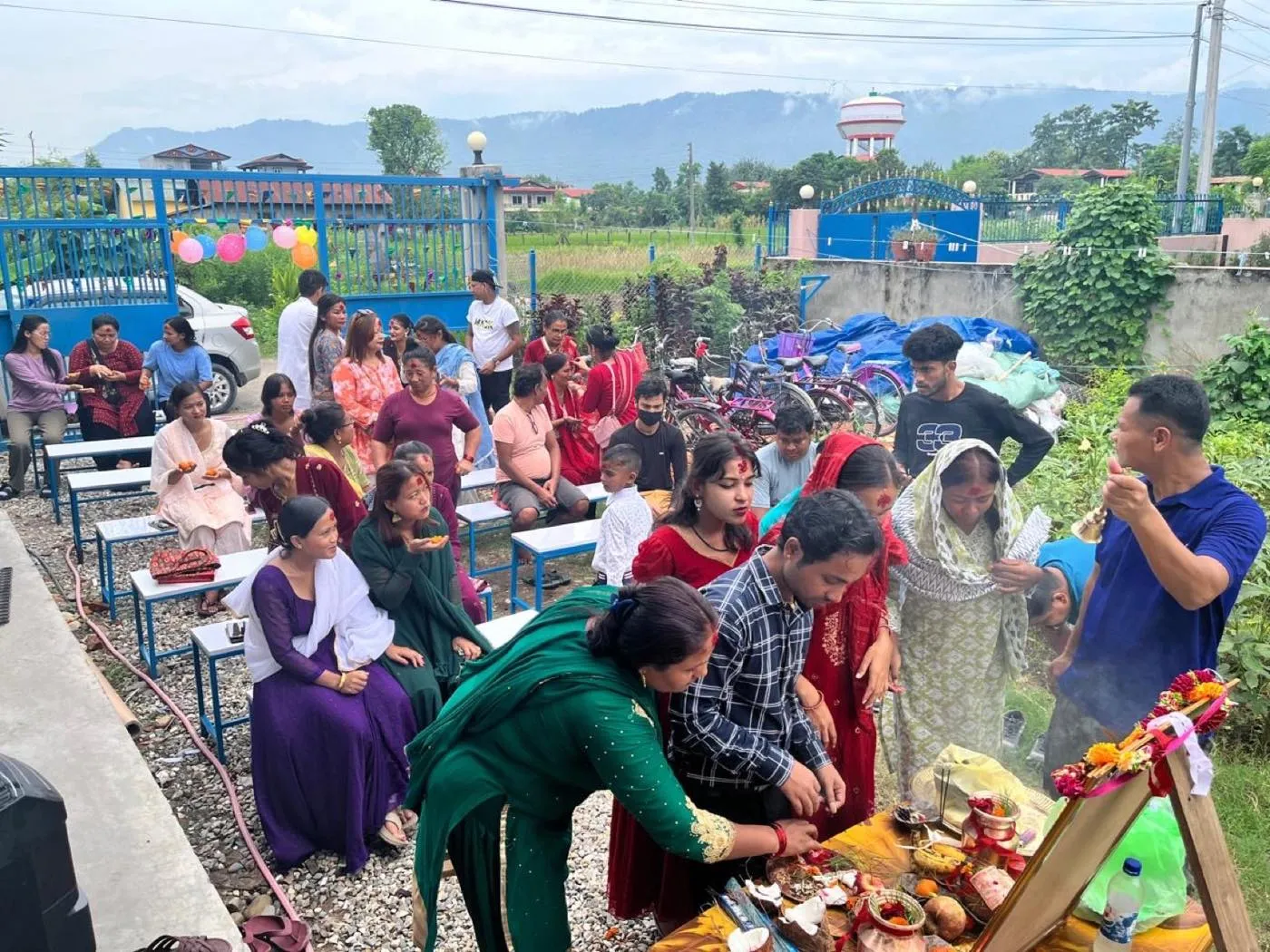
We celebrate Teej together and hold a puja on the factory grounds. अतिथि देवो भव — the guest is god — is how we treat every visitor.

Buyer tip: Dashain and Tihar, Nepal’s biggest festivals, usually fall in October–November, when much of the country takes holiday. We plan production calendars around them — so should your delivery dates.

Teej at the factory gate, Gaindakot
A puja on the factory grounds
Festival day in Gaindakot

The land

Mountains, rivers and a road to the sea.

Map of Nepal: where Trishakti Apparel makes your garments Nepal’s Himalayan peaks along the north, including all eight 8,000-metre mountains, and its river systems — Mahakali, Karnali, Gandaki (Narayani), Bagmati and Koshi — flowing south towards the Ganga and the Bay of Bengal. Gaindakot sits beside Devghat, where the Kali Gandaki and Trishuli form the Narayani. Roads lead to the Birgunj dry port for sea freight and to Kathmandu airport for air freight. Everest 8,849 mKangchenjunga 8,586 mMakalu 8,485 mCho Oyu 8,188 mDhaulagiri 8,167 mManaslu 8,163 mAnnapurna 8,091 m NarayaniBagmatiKoshiKali GandakiKarnaliArunTrishuliSun KoshiMahakaliBheri To Kolkata & Vizag ports → Bay of Bengal ✈ air INDIA CHINA (TIBET)

← Swipe the map · tap any mountain or pin →

Gaida Chowk · ≈200 m

Gaindakot — our factory

Our cut-and-sew floor: 150+ machines and a team that is 80% women. Near Nepal’s East–West Highway, minutes from Devghat, where the Kali Gandaki and the Trishuli become the Narayani.

Capital · Tribhuvan International Airport

Kathmandu

Our air-freight gateway (FCA Kathmandu), about five hours by road. Samples and urgent orders fly from here and usually land within a week.

Start of the sea route

Birgunj dry port

Nepal’s main dry port, rail-linked to Kolkata/Haldia and Visakhapatnam. Our sea cargo crosses India here — heading, like every river on this map, for the Bay of Bengal.

Lake city below the Annapurnas

Pokhara

Nepal’s lakeside city beneath Machhapuchhre and the Annapurna range — about half a day’s drive from our factory. The Seti Gandaki runs through it.

Birthplace of the Buddha

Lumbini

A UNESCO World Heritage Site in the plains west of us, near the Bhairahawa–Sunauli crossing into India.

8,849 m · world’s highest

EverestSagarmatha (सगरमाथा), “forehead of the sky”

The highest point on Earth, on Nepal’s border with China. Its Nepali name means “forehead of the sky”; the Sherpa people call it Chomolungma.

Where
Solukhumbu · Sagarmatha National Park (UNESCO)
First ascent
29 May 1953 — Tenzing Norgay Sherpa and Edmund Hillary

8,586 m · world’s 3rd highest

Kangchenjunga“Five treasures of the snow”

The world’s third-highest mountain, in Nepal’s far east. Its five summits are said to hold five treasures — gold, silver, gems, grain and holy books.

Where
Taplejung · on the Nepal–India (Sikkim) border
First ascent
25 May 1955 — Joe Brown and George Band, who stopped just short of the top out of respect for its sanctity

8,516 m · world’s 4th highest

Lhotse“South peak” (of Everest)

The world’s fourth-highest mountain, standing shoulder to shoulder with Everest — the two share much of the same climbing route.

Where
Solukhumbu · joined to Everest by the South Col
First ascent
18 May 1956 — Ernst Reiss and Fritz Luchsinger (Swiss expedition)

8,485 m · world’s 5th highest

Makalu

The world’s fifth-highest mountain, a striking four-sided pyramid rising above the Arun valley — a river that flows on to join the Koshi.

Where
Sankhuwasabha · Makalu Barun National Park
First ascent
15 May 1955 — Lionel Terray and Jean Couzy (French expedition)

8,188 m · world’s 6th highest

Cho Oyu“Turquoise goddess”

The world’s sixth-highest mountain, west of Everest, beside the ancient Nangpa La trade route between Nepal and Tibet.

Where
Solukhumbu · near the Nangpa La pass to Tibet
First ascent
19 October 1954 — Herbert Tichy, Joseph Jöchler and Pasang Dawa Lama

8,167 m · world’s 7th highest

Dhaulagiri I“White mountain”

The world’s seventh-highest mountain. The Kali Gandaki runs between it and Annapurna through one of the deepest gorges on Earth — then on past our factory to Devghat.

Where
Myagdi · west of the Kali Gandaki gorge
First ascent
13 May 1960 — Swiss–Austrian expedition (Kurt Diemberger and team, with Nawang Dorje and Nima Dorje Sherpa)

8,163 m · world’s 8th highest

Manaslu“Mountain of the spirit”

The world’s eighth-highest mountain, in Gorkha district — the homeland of the Gorkha kings who unified Nepal.

Where
Gorkha · Manaslu Conservation Area
First ascent
9 May 1956 — Toshio Imanishi and Gyalzen Norbu Sherpa (Japanese expedition)

8,091 m · world’s 10th highest

Annapurna I“Goddess of the harvests”

The first 8,000-metre mountain ever climbed. Its massif towers over Pokhara, and its snow feeds the Kali Gandaki and Seti rivers.

Where
Myagdi / Kaski · Annapurna Conservation Area
First ascent
3 June 1950 — Maurice Herzog and Louis Lachenal (French expedition)

7,422 m

Ganesh Himal (Ganesh I)Named after Lord Ganesh

A cluster of peaks named for Ganesh, remover of obstacles — clearly visible from Kathmandu on a clear morning.

Where
Gorkha / Dhading / Rasuwa · on the Tibet border
First ascent
1955 — Raymond Lambert, Eric Gauchat and Claude Kogan

7,234 m

Langtang Lirung

The high point of the Langtang valley, the closest great Himalayan range to Kathmandu. Its meltwater feeds the Trishuli — which meets the Kali Gandaki at Devghat, beside our factory.

Where
Rasuwa · Langtang National Park

7,134 m

Gauri ShankarGauri and Shankar — Parvati and Shiva

A mountain sacred to Hindus as the divine couple Parvati and Shiva, and to Sherpas as Tseringma, one of five sisters of long life.

Where
Dolakha · Rolwaling valley
First ascent
8 May 1979 — John Roskelley and Dorje Sherpa

7,132 m

Api

The highest peak of Nepal’s far west, rising above the upper Mahakali valley — remote, rarely visited and beautiful.

Where
Darchula · Api Nampa Conservation Area, far-west Nepal

7,031 m

Saipal

A lone giant of the far west, standing between the Seti and Karnali river systems.

Where
Bajhang / Humla · far-west Nepal

6,993 m

Machhapuchhre“Fish tail”

Named for its twin-pointed summit shaped like a fish’s tail. Held sacred to Shiva, it is closed to climbers — its summit has never officially been stood upon.

Where
Kaski · above Pokhara
First ascent
None — closed to climbers; a 1957 team turned back about 50 m below the summit, out of respect

6,812 m

Ama Dablam“Mother’s necklace”

Often called the most beautiful mountain in the world — its long ridges are the mother’s arms, and its hanging glacier the dablam, a pendant worn by Sherpa women.

Where
Solukhumbu · Khumbu valley
First ascent
13 March 1961 — Mike Gill, Barry Bishop, Mike Ward and Wally Romanes

Tap a pin or any mountain. Outline: Survey Department of Nepal. Rivers © OpenStreetMap contributors. Peaks: all eight of Nepal’s 8,000-metre mountains.
Questions

About Nepal.

Why is Nepal’s flag not a rectangle?
It combines two pennants into one — the only national flag in the world that is not a rectangle. Its exact geometry is written into Schedule 1 of Nepal’s Constitution.
What do the moon and sun on Nepal’s flag mean?
The moon is commonly said to stand for the calm, gentle nature of the Nepali people and the sun for their fierce resolve; together they express the hope that Nepal will last as long as the sun and moon.
Has Nepal made garments for export before?
Yes. Under the global quota system, garments were one of Nepal’s top exports — around 2000 about Rs 12 billion a year, mostly to the US. Since quotas ended in 2005, Nepal’s makers have focused on quality, flexibility and smaller runs.
Was Nepal ever colonised?
No. Nepal was never ruled by a foreign power; after the Anglo-Nepal war of 1814–16 it kept its independence.

Sources & last verified

Page facts checked

We link every trade claim to the body that publishes it — official sources first. Rules change; if you spot something out of date, tell us.

  1. 01 Lumbini, the Birthplace of the Lord Buddha UNESCO World Heritage Centre · official · checked 24 Sept 2026
  2. 02 Kathmandu Valley UNESCO World Heritage Centre · official · checked 24 Sept 2026
  3. 03 Sagarmatha National Park UNESCO World Heritage Centre · official · checked 24 Sept 2026
  4. 04 The mysterious, mathematical origins of the world’s only non-rectangular national flag CNN Travel · checked 24 Sept 2026
  5. 05 Constitution of Nepal (2015) — Article 8 and Schedule 1: the national flag Constitute Project · checked 24 Sept 2026
  6. 06 Nepal — History Encyclopaedia Britannica · checked 24 Sept 2026
  7. 07 Prithvi Narayan Shah — unifier of Nepal (1768) Encyclopaedia Britannica · checked 24 Sept 2026
  8. 08 Gurkha Encyclopaedia Britannica · checked 24 Sept 2026
  9. 09 Nepal earthquake of 2015 Encyclopaedia Britannica · checked 24 Sept 2026
  10. 10 Export of Nepali readymade garment hits 13-year high (2019) — the pre-2005 quota era The Kathmandu Post · checked 24 Sept 2026
  11. 11 Flag of Nepal (adoption 16 December 1962; symbolism) Wikipedia · checked 24 Sept 2026

Namaste — let’s talk

Bring a little of Nepal to your shelves.

Send a tech pack, a photo or just an idea. You’ll hear back from the people who run the floor — usually within 24 hours, Nepal time.

Get a quote WhatsApp