Startups · How to
How much does a clothing sample cost? Published price examples and what drives them
What clothing samples cost, with published examples from US, UK and Chinese sources, what pushes the price up, whether sample fees are credited against bulk, and how sampling works at our factory in Nepal.
A clothing sample usually costs far more than the same garment in bulk, because it is made one at a time. Published examples range from about £30 for a simple T-shirt in the UK to $150 to $400 per garment for a domestic US sample, often before pattern-making. This guide collects the figures that suppliers and industry sites publish, explains what moves the price, and sets out our own sampling terms. Every price below is the publisher’s own figure for its own market, not a quote from us.
How much does a clothing sample cost?
It depends on the country, the garment and what is included. Maker’s Row, a US manufacturing marketplace, says a domestic sample “typically costs $150 to $400 per garment”, with pattern-making “often billed separately, running $150 to $400 per design”. In the UK, Make it British lists £30 to £100+ for a T-shirt and £80 to £200+ for a hoodie.
| Source (publisher’s own figures) | Market | What it says |
|---|---|---|
| Maker’s Row (Aug 2026) | United States | $150–$400 per garment for a domestic sample; pattern-making often extra at $150–$400 per design; 2–4 weeks |
| Make it British (updated Mar 2025) | United Kingdom | T-shirt or simple top £30–£100+; hoodie or sweatshirt £80–£200+; shirt £60–£150+; pattern cutters £25–£50 an hour |
| Shanghai Garment (undated) | China | An illustrative quote: prototype $150, pre-production sample $200, shipping $80 |
| Alibaba.com Seller Blog | Southeast Asia sellers | Sample fees of $100–$300, typically reimbursed on bulk orders of 100+ pieces |
These are vendor-published figures for different markets and dates. Use them to judge whether a quote is in a normal range, not as a price list. We found no published, attributable sample prices for factories in Bangladesh, India, Portugal or Vietnam.
Why does a sample cost more than the bulk price?
A sample is made one piece at a time. The pattern, the cutting and each sewing step are set up for a single garment, so none of the cost is spread across a run. Make it British puts it plainly: samples “typically cost 2–3 times the final production cost”, and there is “no economy of scale with sampling”.
A US patternmaker, Kathleen Fasanella of Fashion-Incubator, described the basic sum in 2014: sample cost is the workshop’s hourly rate multiplied by how long it takes to cut and sew the piece. Her figures are old, but the method still explains most quotes.
What makes a clothing sample more expensive?
The price rises with the work involved: a new pattern, a complicated construction, special fabric, more rounds of changes and faster delivery. A clear tech pack lowers it, because the sample maker spends less time guessing.
- Pattern work. Drafting a new pattern is often the biggest single cost, and is frequently quoted separately.
- Construction. Pockets, zips, special seams and finishes take longer to sew.
- Fabric. Buying a small length of a special fabric costs more per metre than bulk.
- Rounds of changes. Each fit correction is another sample. Maker’s Row says many suppliers include two to four rounds before charging extra.
- Sizes. A size set means one sample in each size, not one in total.
- Speed and courier. Rush work costs more, and international courier is usually charged separately.
- Your tech pack. Missing measurements or vague notes lead to extra rounds. Our guide to tech packs covers what to include.
Are sample fees credited against the bulk order?
Often, but not always, and rarely as a cash refund. Shanghai Garment says many factories “will credit the sample fee against your first bulk order invoice”, and Alibaba’s seller blog says fees are typically reimbursed once a bulk order reaches 100 or more pieces. Make it British notes that UK factories generally do not work that way.
Make it British also warns that “if a manufacturer offers ‘free’ sampling, the cost is almost certainly hidden somewhere else”. That is a fair question to ask any supplier, including us. The answer should be a written list of what is free, what is charged, and when a fee is credited.
How does sampling work at Trishakti Apparel?
Custom samples to your tech pack are free for up to 3 styles, with one corrected round per style plus the pre-production sample. You pay the express courier, and we credit it against your first bulk order. Extra styles or rounds are charged at cost and credited the same way. Samples take 7–14 days after we review your tech pack.
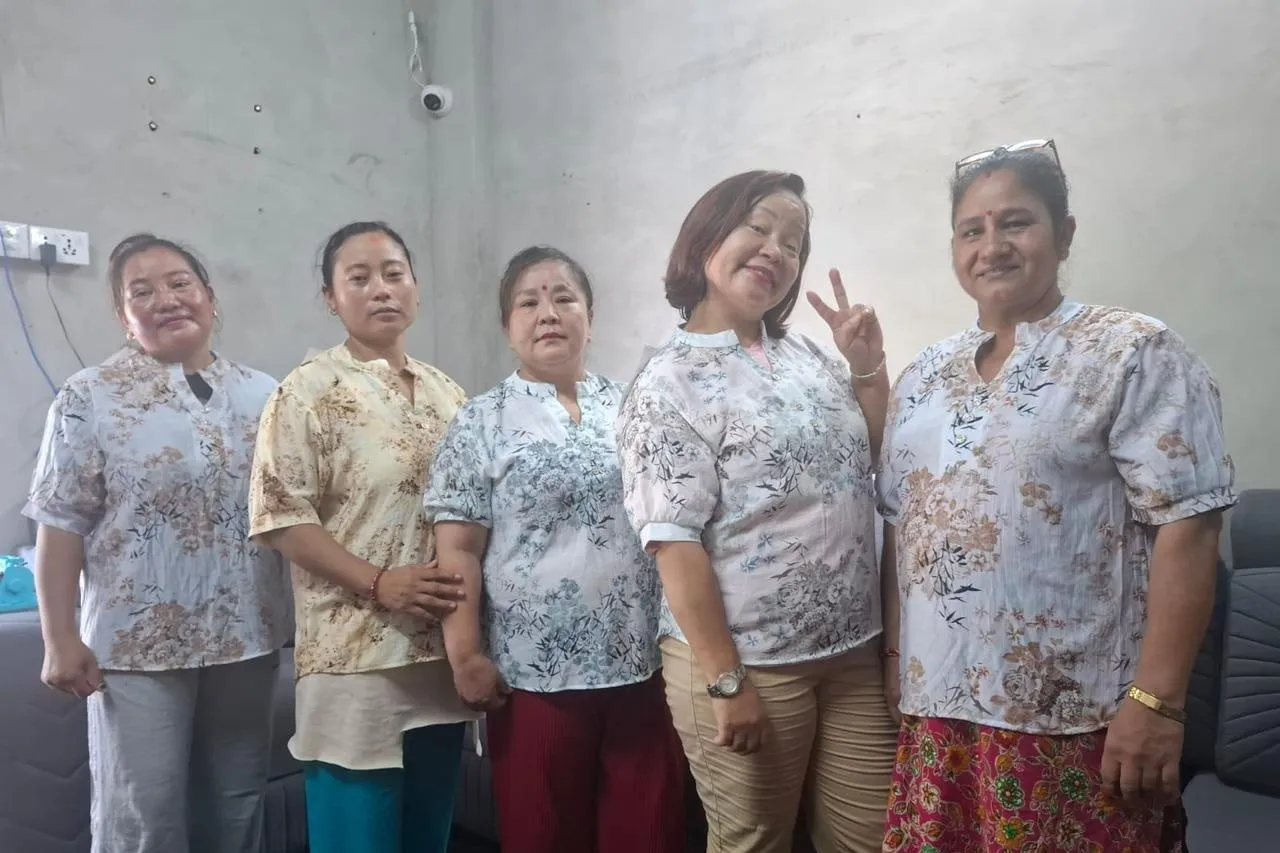
Bulk orders start at 200 pieces per style and colour, with 1,000 pieces per order (our export minimum). If you would rather feel our fabrics and finish before sending a tech pack, our sample kit has three finished garments, fabric swatches and a colour card. See what to expect from sample to bulk for each stage, from the first sample to the pre-production sample you approve.
How can you keep sample costs down?
Send a complete tech pack, start from an existing pattern or a reference garment, limit the first round to the styles you will really order, and agree in writing what each round includes. Ask whether the fee is credited against bulk, and at what quantity.
- Be specific. Measurements, fabric, trims and construction notes on paper, before the first sample.
- Start small. Sample the styles you are ready to order, not the whole range.
- Use a reference. A garment whose fit you like saves pattern time.
- Agree the rounds. How many corrections are included, and what each extra round costs.
- Ask about credit. Whether the fee comes off your first bulk invoice, and at what order size. How MOQ works explains the order size side.
Frequently asked
How much does a clothing sample cost?
Why do samples cost more than the bulk price?
Are sample fees refunded?
About the author
Santosh Rijal runs Trishakti Apparel, the export knitwear factory his family built on three decades in Nepal’s fashion trade. He writes about sourcing, duty and production from the factory floor in Gaindakot.
LinkedIn ↗